
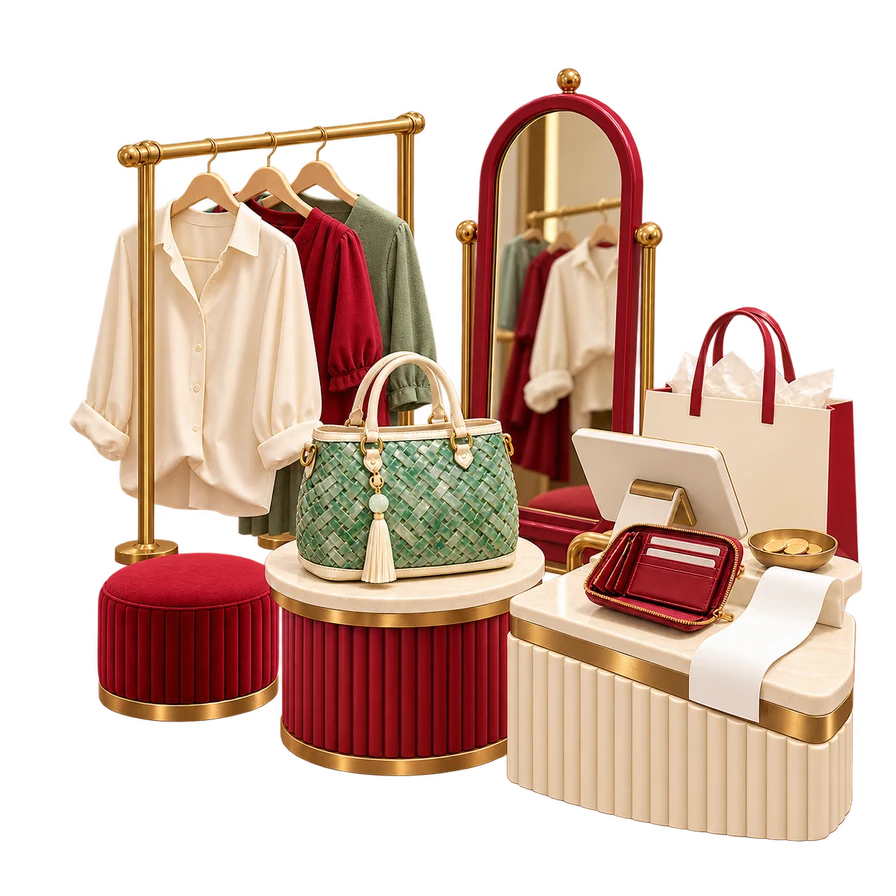
THE SHORT ANSWER
Begin with a specific task: looking, asking a price, checking a size or paying. Learn a small phrase for each stage, then practise understanding the answer. A bargaining question belongs in a suitable market conversation; it is not a universal opening for every shop.
FOLLOW THE STEPS
A purchase has more than one decision
- Browse我睇吓啫ngo5 tai2 haa5 ze1
Looking does not commit you to buying.
- Establish the price呢個幾多錢?ni1 go3 gei2 do1 cin2
Keep the exact item and quantity clear.
- Check suitability有冇細碼jau5 mou5 sai3 maa5
Check the option you need before choosing to buy.
- Check payment可唔可以用八達通?ho2 m4 ho2 ji5 jung6 baat3 daat6 tung1
Ask whether your preferred method is accepted; the question does not guarantee it.
Start with what you need
Auntie’s browsing line tells the assistant that you are looking without committing to buy. It can end an offer of help politely when your expression and delivery are friendly. If you do want something, pointing and saying “this one” is a useful starting point, but check that both of you mean the same item. A display can contain several sizes or prices.
Avoid learning only a forceful buying line. The more useful skill is moving between browsing and a clear request: look, identify the item, ask your question, and wait. A pause gives the assistant room to supply the information you need.
我睇吓啫
ngo5 tai2 haa5 ze1
I am just having a look.
我想買呢個
ngo5 soeng2 maai5 ni1 go3
I want to buy this
Tap play to hear the saved app recording.
我想買呢個
ngo5 soeng2 maai5 ni1 go3
I want to buy this
Tap play to hear the saved app recording.
Ask the price, then check what it covers
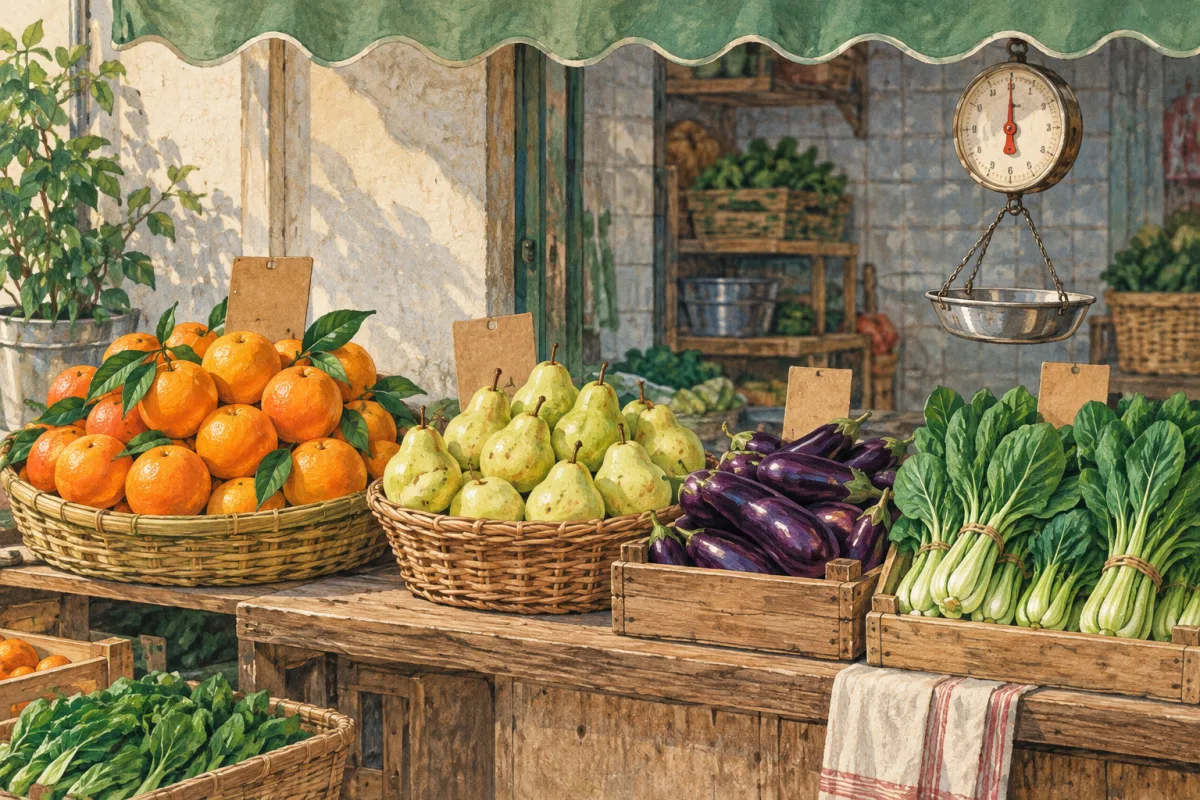
A price answer may refer to one item, a set, a particular size or a displayed offer. Point again or check the label before treating a number as the total. If you miss the answer, asking for repetition is more reliable than agreeing and guessing. You can also show the number on a screen and ask the seller to confirm it.
Auntie’s “any cheaper?” line asks for a reduction. Hong Kong Tourism Board discusses bargaining at particular street markets; that does not establish a bargaining custom for every store. In a fixed-price shop, start with the marked price and any advertised offer.
呢個幾多錢?
ni1 go3 gei2 do1 cin2
how much is this?
Tap play to hear the saved app recording.
仲有冇得平呀
zung6 jau5 mou5 dak1 peng4 aa3
Can you make it any cheaper?
呢個幾多錢?
ni1 go3 gei2 do1 cin2
how much is this?
Tap play to hear the saved app recording.
可唔可以講多次呀?
ho2 m4 ho2 ji5 gong2 do1 ci3 aa3
can you say it again?
Tap play to hear the saved app recording.
A LITTLE PRACTICE
Keep the purchase moving
Read the explanation
可唔可以用八達通? · ho2 m4 ho2 ji5 jung6 baat3 daat6 tung1
Correct. Ask about that method, then listen before presenting it. Acceptance depends on the business.
Check suitability before paying
For clothes, size and permission to try are different questions. An assistant may have a smaller size without allowing a fitting for that product. Ask one question, listen, and then make the next request. For another product, identify the feature that matters before treating a favourable price as a good purchase.
“Can I try?” is a reusable request, but the action should be clear from the situation. With clothes in hand it can mean trying them on; elsewhere it could mean testing something. Pointing, showing the item or adding its name prevents an unnecessary misunderstanding.
有冇細碼
jau5 mou5 sai3 maa5
do you have a small size?
Tap play to hear the saved app recording.
有冇細碼
jau5 mou5 sai3 maa5
do you have a small size?
Tap play to hear the saved app recording.
Ask which payment method is accepted
Learn the question and your own answer together. Asking “cash or credit card?” does not mean every shop offers both, and asking about Octopus does not promise acceptance. Check the response before presenting a card or assuming that a particular payment device works. The relevant phrase recordings let you practise each short exchange.
A bag request is a separate choice at checkout. Say that you do not need one clearly, then confirm the total. If the amount surprises you, stop and ask about the bill while the items are still in view; a joke about robbery is a poor substitute for identifying the discrepancy.
現金定信用卡?
jin6 gam1 ding6 seon3 jung6 kaat1
Cash or credit card?
Tap play to hear the saved app recording.
可唔可以用八達通?
ho2 m4 ho2 ji5 jung6 baat3 daat6 tung1
can I pay with Octopus?
Tap play to hear the saved app recording.
Describe the problem before requesting a solution
Auntie’s refund line states a desired outcome, not an entitlement or a shop policy. Bring the receipt or order details and explain which item you mean and what happened. The staff may discuss repair, exchange or another process; this guide teaches the conversation rather than making a promise about the result.
For practice, follow a single imaginary purchase from browsing through payment. Change one detail on the second run: a different size, an unclear price or a payment method that is unavailable. That prepares you to respond instead of reciting the same list regardless of the answer.
我想要退錢
ngo5 soeng2 jiu3 teoi3 cin2
I want a refund.
HEAR THE LINE IN CONTEXT
Watch with Auntie
I am just having a look.
This clip illustrates one expression connected with the topic. The written examples above extend the lesson.
Open the full phrase lesson ↗Read the Cantonese line
- Cantonese
- 我睇吓啫
- Jyutping
- ngo5 tai2 haa5 ze1
- Meaning
- I am just having a look.
TAKE IT WITH YOU
Take it into a conversation
You like a shirt but do not know the price or whether a smaller size exists. Which two questions come before a bargaining request?
See one possible answer
Ask 呢個幾多錢? and 有冇細碼. Establish the price and suitable size first. Only ask about a reduction if bargaining fits that particular setting.
Keep these in mind
- Match the phrase to the stage of the purchase.
- Check the item and quantity behind a quoted price.
- Ask about payment and returns without assuming the answer.