
What to check before you choose
- Can you hear complete exchanges?A single word is useful, but a question and reply help you recognise what comes next.
- Can you follow the sounds?Look for Jyutping and tone numbers beside the Chinese and a recording you can replay.
- Do you have to answer?A useful course should move beyond listening into choosing or producing a reply.
- Does its first lesson fit your life?Try a greeting, a polite request, or a situation you will actually face this week.
Where Canto School fits
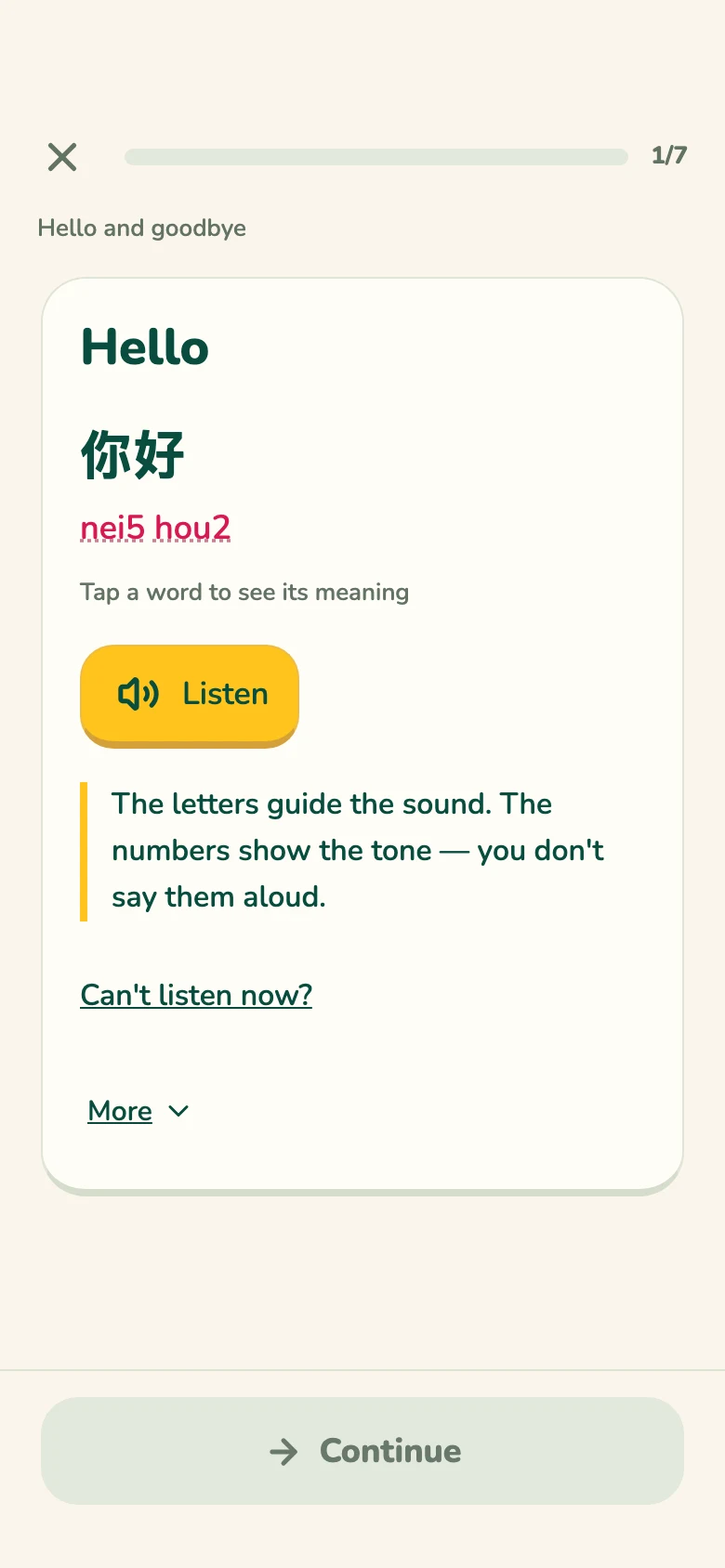
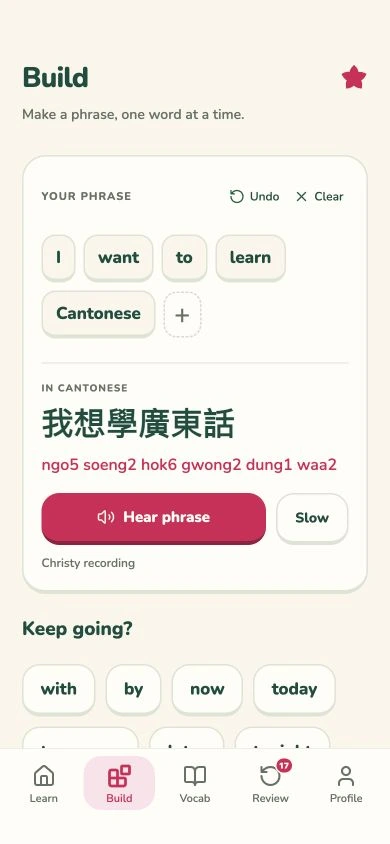
Canto School is an iPhone course for English speakers learning spoken Hong Kong Cantonese. Its current App Store listing describes short everyday scenes, including meeting people, ordering, transport, shopping, and asking for help. Lessons combine Cantonese audio, Traditional Chinese, Jyutping with tone numbers, English support, listening choices, and guided replies.
It suits a beginner who wants a route through practical conversations and likes to hear a line before trying a response. The app also lets you search and save useful phrases, slow supported audio, and revisit missed material. Lessons and recordings are bundled for ordinary offline study; purchase verification can need a connection.
Canto School is less suited to someone looking primarily for handwriting drills, a live tutor, or an Android course. It is a learning aid, not a live interpreter. You will still need real conversations and varied listening outside any one app.
Try the lesson sound here
These are saved Canto School phrase clips. They use generated Kiki and Rocky voices prepared for the app, not a device voice reading the page. Audio starts only when you press play.
Tap play to hear the saved app recording.
Tap play to hear the saved app recording.
First listen without reading. Then follow the Jyutping and repeat the full line. The greeting checks whether the sound and notation work for you; the second phrase gives you a useful way to ask for another chance when you miss a reply. For more context, use the beginner roadmap.
See the learning flow
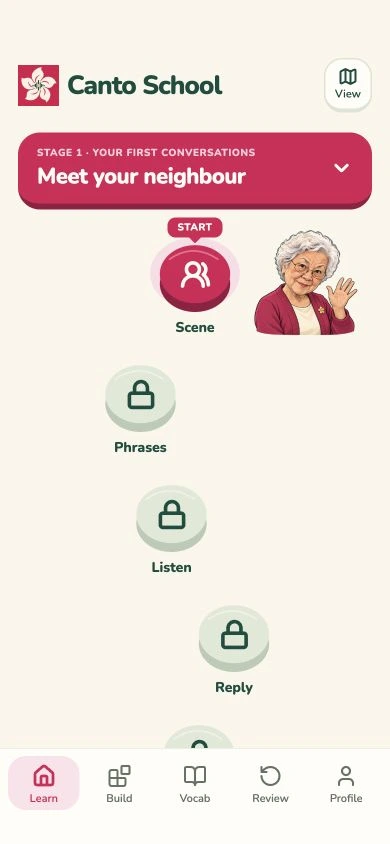
These product previews show a first phrase, a word-by-word builder, and the lesson path. They depict the next app design being prepared, so the installed version may look different. The current App Store listing shows the available version and its official screenshots.
Free access, subscription, and device fit
As listed for the current iPhone version, Canto School is free to download. The first stage, Foundations, and a directions Build sampler are available without the Full Course subscription. Full Course opens the remaining stages, full Build, and the complete Word Bank with recordings and review. Apple shows the monthly price for your storefront before purchase; prices and availability can vary by region.
The App Store currently lists iOS 16.4 or later and English as the app language. Check the live App Store page for compatibility, current access, and the price in your region. Existing paid-app and lifetime-unlock owners can restore their access in the app.
A simple way to decide
Spend one session on the free starting stage. Listen to a complete exchange, use the Jyutping to find one sound you missed, and try the reply without looking first. The next day, test whether you can recognise the greeting and use the repair phrase again. If that feels useful, continue with the course; if you need a different study mode, choose a resource that fills that gap.